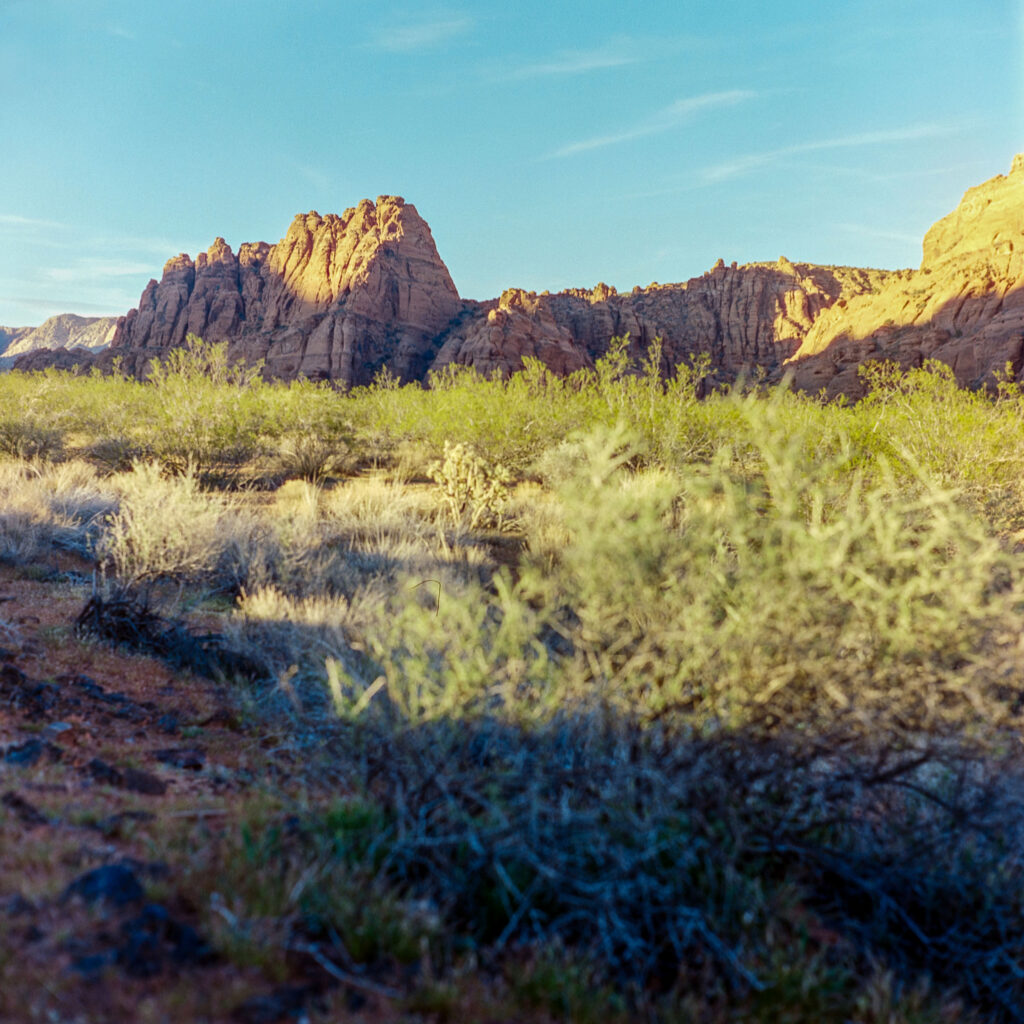
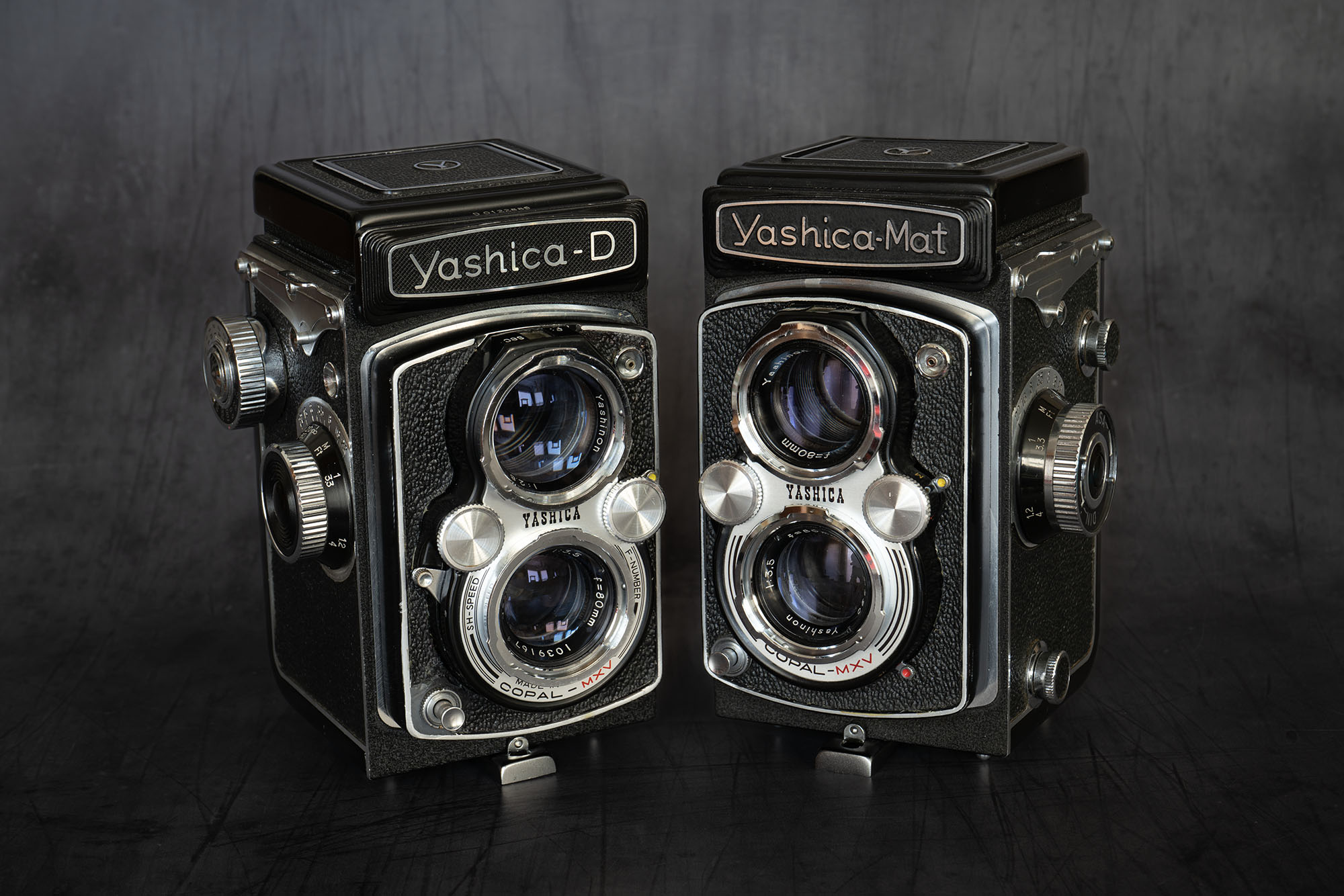
There has been a TLR (Twin Lens Reflex) in my stable for nearly four decades. I expect there will be one within reach until I can no longer see. My first TLR was a Chinese Seagull that I purchased in Spain around 1988. Two Yashicas joined the party at intervals throughout my adventure. These two Yashicas have also been with me for a while now.
The Yashica D I acquired around 1992 from an old photographer, and it had a jammed shutter. I was able to get it going again by removing the self-timer entirely. My YashicaMat was an antique store find, also with a stuck shutter which just needed a good cleaning. Regardless of being more budget-friendly cameras than the Rolleiflex, they served me well. They also taught me how much fun a TLR can be and ingrained in me an appreciation for the square image in the 120 film format.
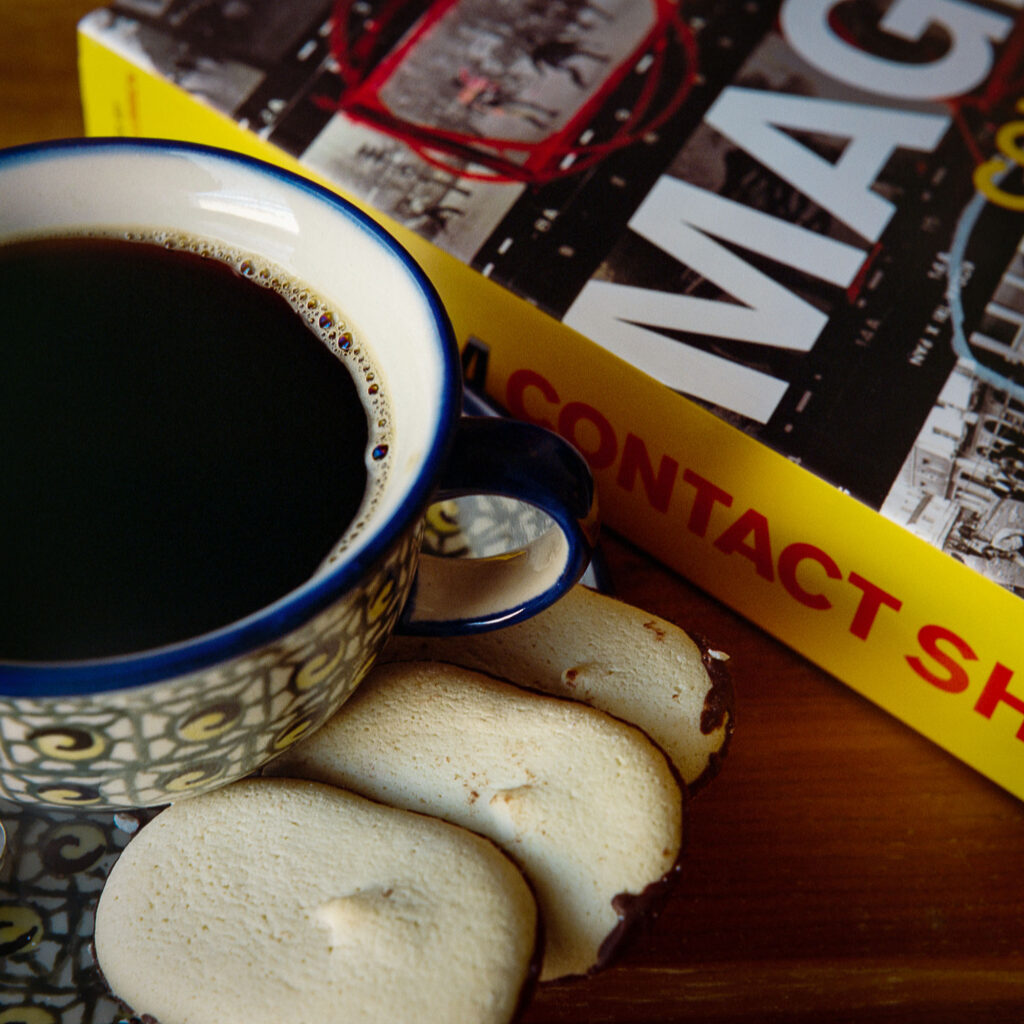
Unfortunately, they have been given less love than they deserve since I acquired the Rolleiflex. Nevertheless, I exercise their shutters and shoot a roll through them every once in a while to keep them from forgetting their purpose. Mechanical cameras like to work, not sit.
Photographing with a TLR is a singular experience, as is shooting with large format, folding cameras, rangefinders, Polaroids, and any other class of camera. It has its quirks and limitations, as expected. That’s part of the fun. Non-photographers immediately react to the unique look and methodology of using a TLR. Looking down through the viewfinder is analog magic.
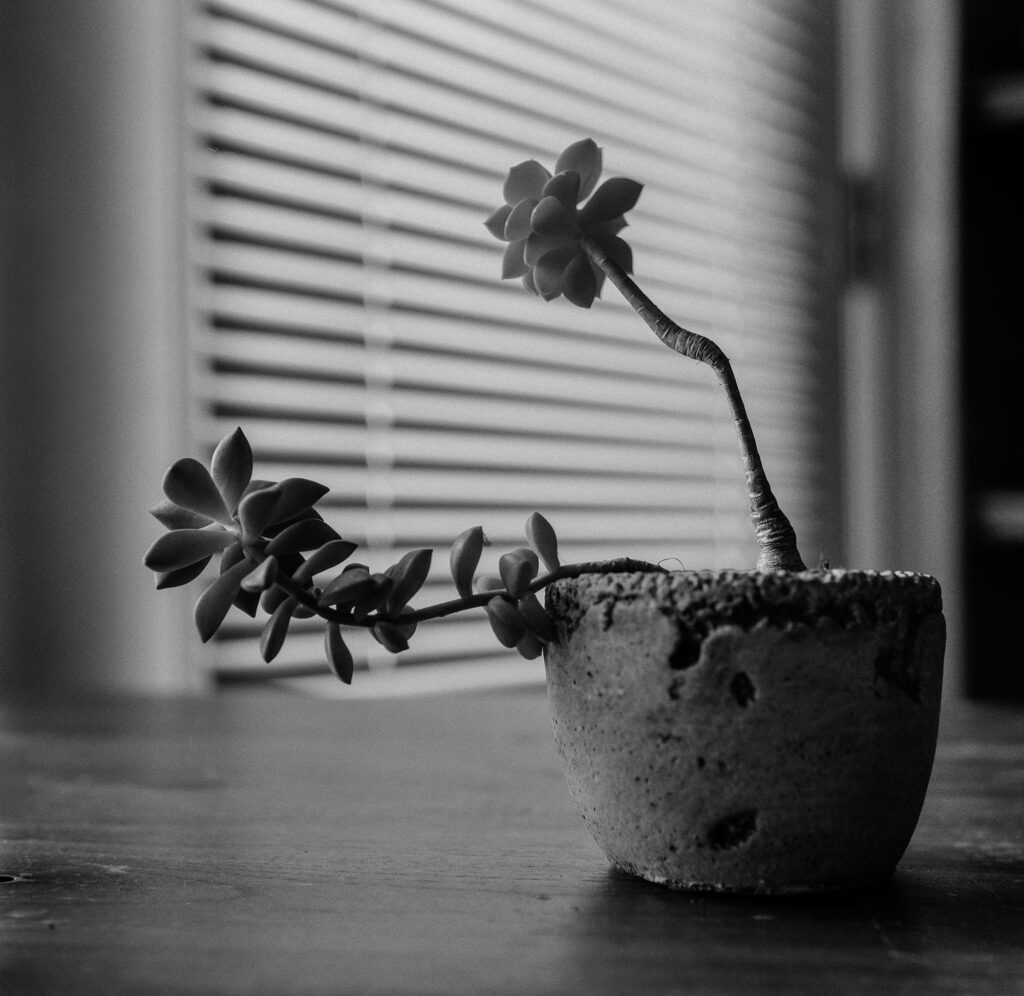
Composing a square photograph presents an opportunity to learn to see differently. I have to switch my mind into the square composition mode. I also think it helps that I am looking down through the viewfinder, but I’m not sure why. Most cameras show the image in a viewfinder of some sort, but I think the act of physically looking away from the subject and directing one’s body and attention toward an isolated image has a beneficial effect.
One can’t deny that the Rolleiflex is the king of the TLR realm, although a myriad of options evolved over time. The Yashica-Mat has a form factor similar to the classic Rolleiflex. This design has a winding lever that both advances the film and cocks the shutter. Focussing is done with a knob on the left side, and the film advance lever is on the right.
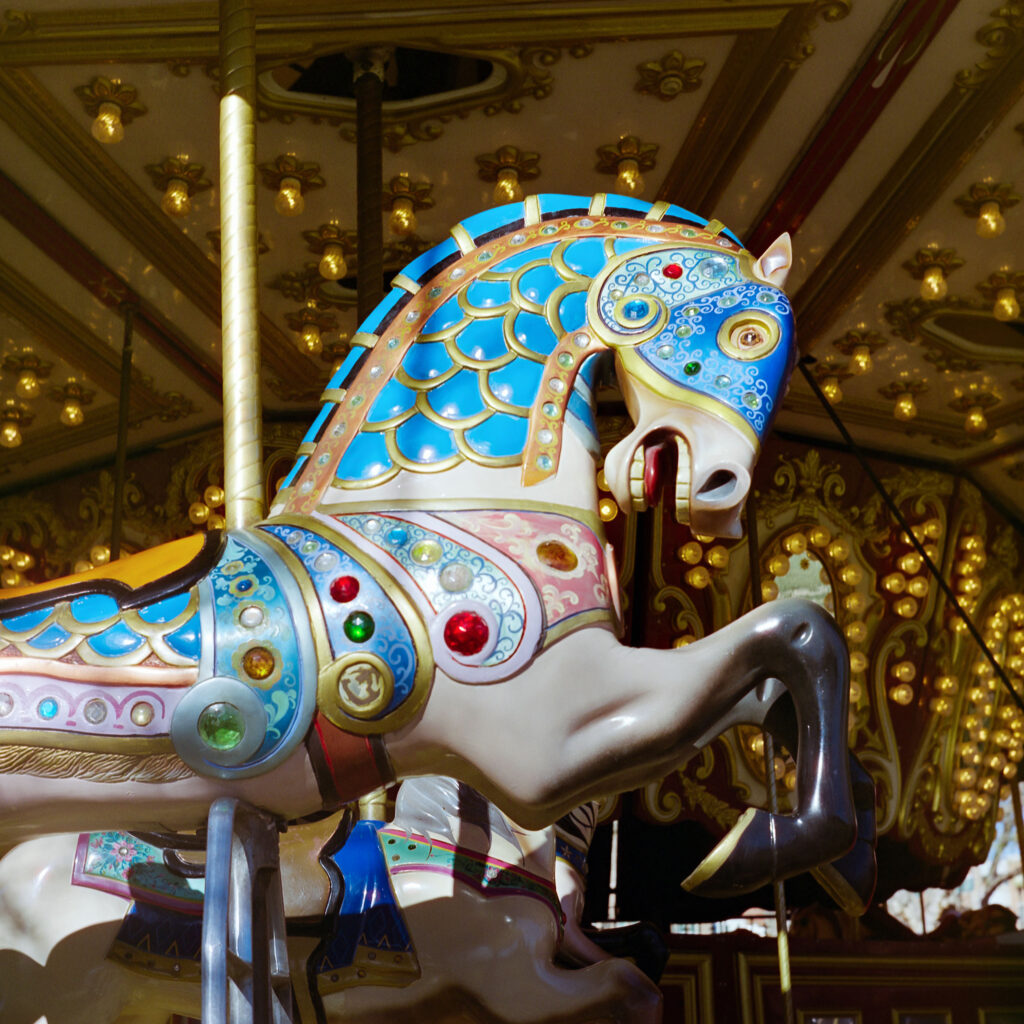
Yashica’s model “D” has different configuration, with the focus and film advance both found as knobs on the right side. After making an exposure, the center button of the film advance knob must be pressed to unlock it. It can then be rotated to the next frame. Cocking shutter requires a separate action, by pressing down on the lever to the right of the lower (taking) lens.
Exposure controls are similar to the Rolleiflex, with the shutter speed wheel on the right and the aperture wheel on the left, between the viewing and taking lenses. A small window above the viewing lens shows both the aperture and the shutter speed. There is no meter, so exposure must be estimated visually or measured by an external meter. The Yashica D has a cold shoe on the left side, whereas the ‘Mat does not.

One unique aspect of the TLR design is that looking at the image through the viewfinder, it is reversed horizontally. It has no prism to re-orient it, just a mirror to bounce it up to the focus screen. This requires a bit of mental adaptation. I still catch myself forgetting this. It must have become second nature to the old-school photojournalists.
Having that reversed image, I believe, causes me to look more carefully and scrutinize the frame more that I perhaps would in an SLR. While it may seem like an annoyance, it may lead to better images as a result of that increased attention to composition. My theory, not gospel truth.
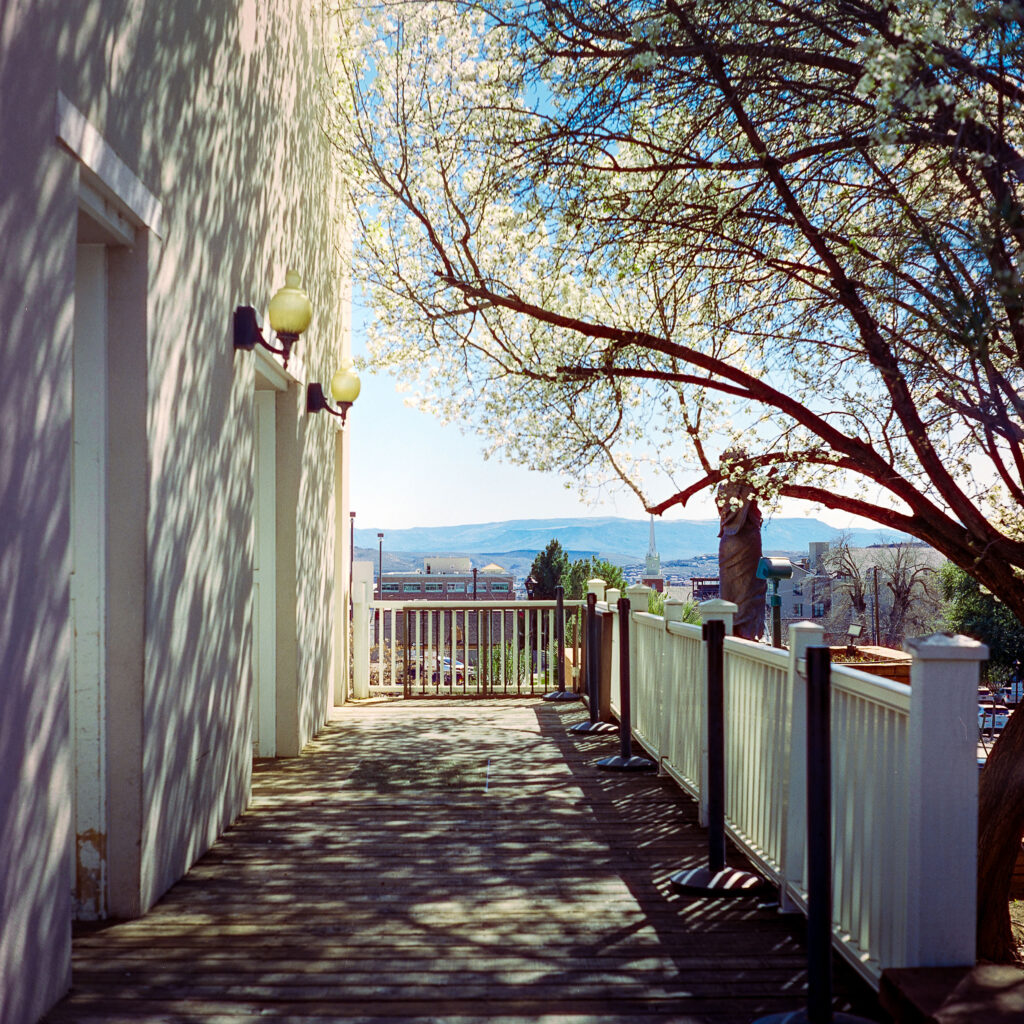
So, in the words of the talented podcaster Neale James, “What is your why?” Perhaps it is the uniqueness of the TLR experience. There is an undeniable nostalgic romance to it. In public, the TLR attracts attention where a bog-standard SLR may not. Shifting one’s vision to the square 1:1 aspect ratio is a mental and visual exercise. Square images that are skillfully seen, composed and shot command attention.
The image and build quality of Yashica’s TLRs are better than the price point would suggest. Prices for vintage cameras are dictated by fickle variables. Celebrity appearances will triple the price of almost anything overnight, which is just plain silly. Certain popular personalities on Youtube or photography podcasts can drive the price up by a mere mention. It’s a mad world.
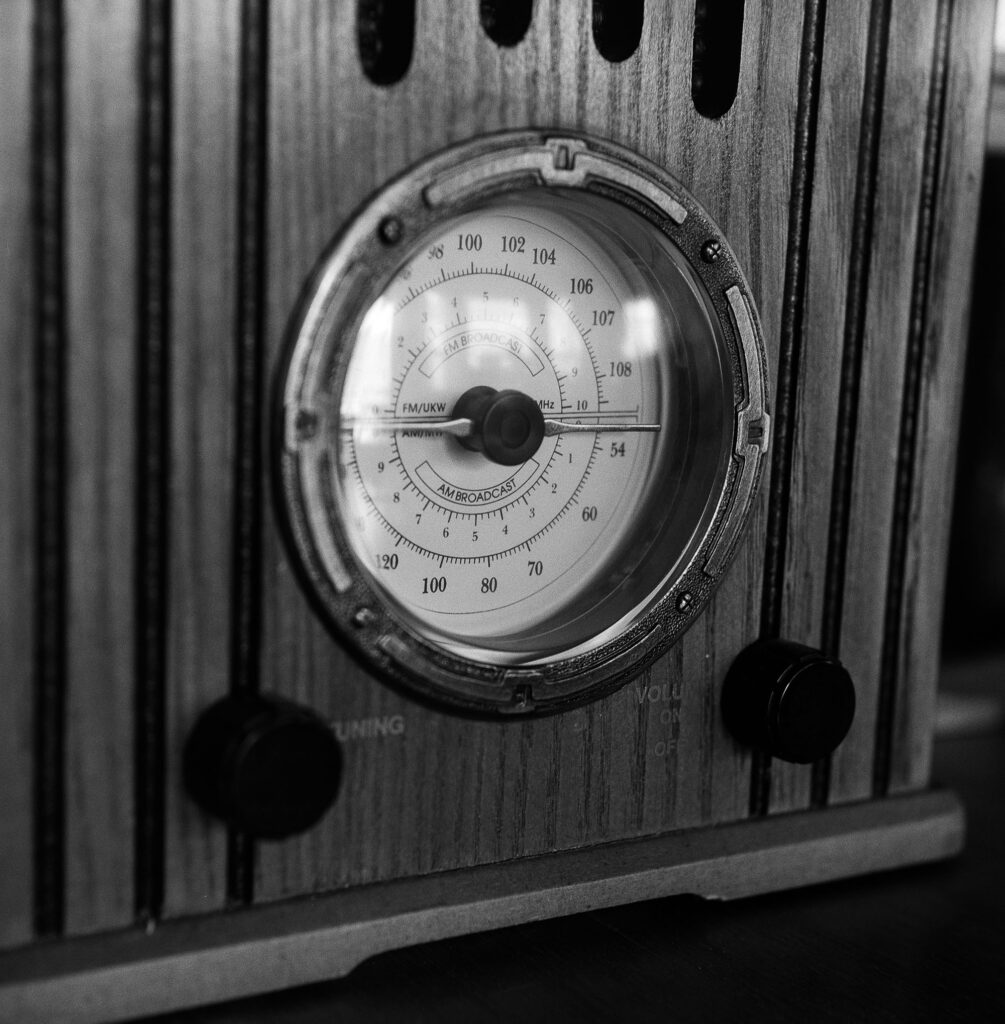
Fortunately, Yashica’s TLRs seem to have avoided that nonsense thus far. As a result, they are still priced pretty fairly at the time of this writing. Finding one that is working properly shouldn’t be difficult. I would suggest that route, given their current pricing. The cost of servicing may exceed the price of a working model.
For years, a Yashica TLR brought me the joy of medium format square photography, at a fraction of the cost of a Rolleiflex. I have zero regrets in that regard. They are very nice cameras, capable of making stunning images in the hands of a skilled photographer. Perhaps someday I will be one.