
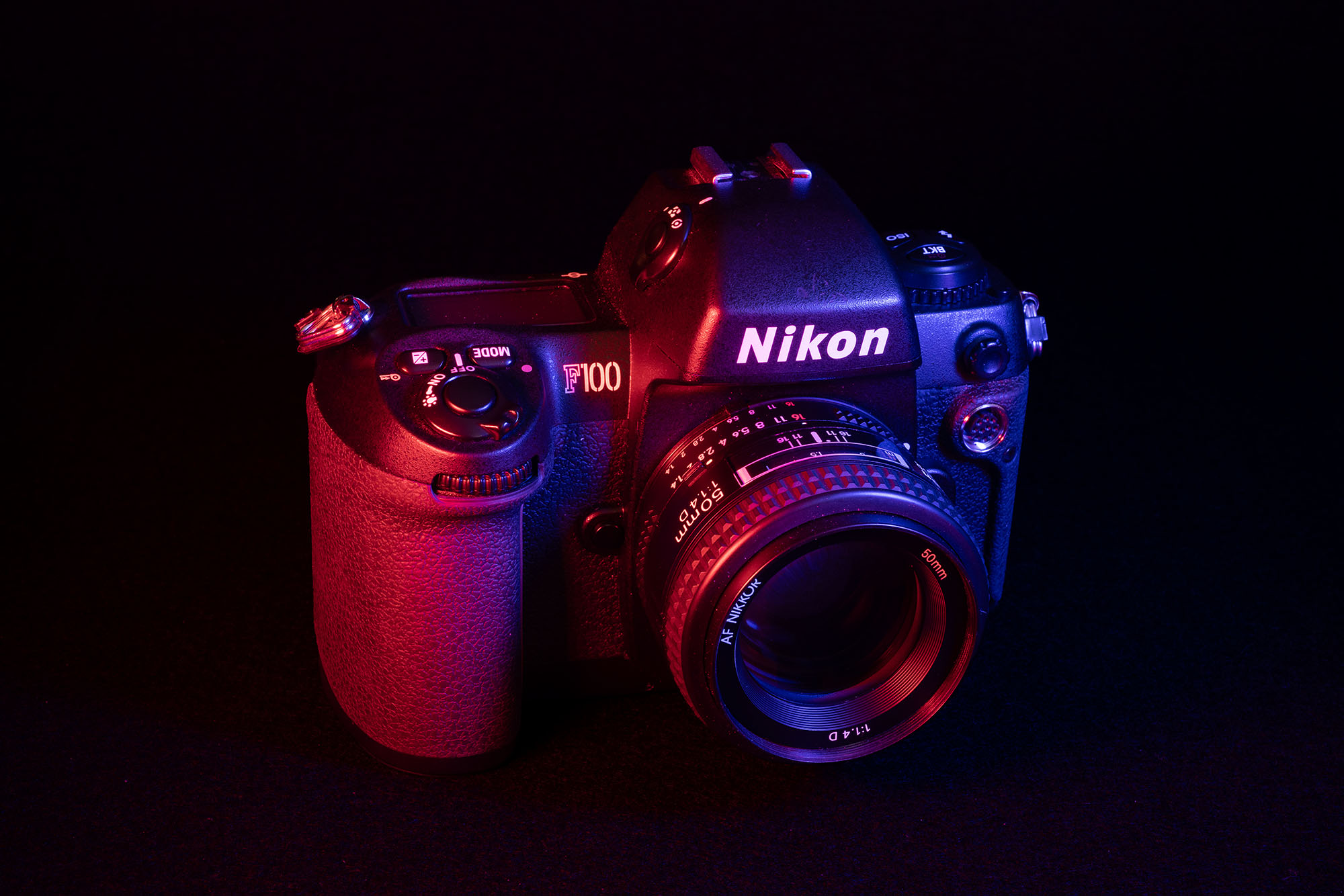
If you have arrived here after searching for reviews of this camera, then I suspect you have already read a few. There are volumes written about this camera, the vast majority extolling its virtues and technological prowess. I was aware of its reputation, and when one became available, I couldn’t resist.
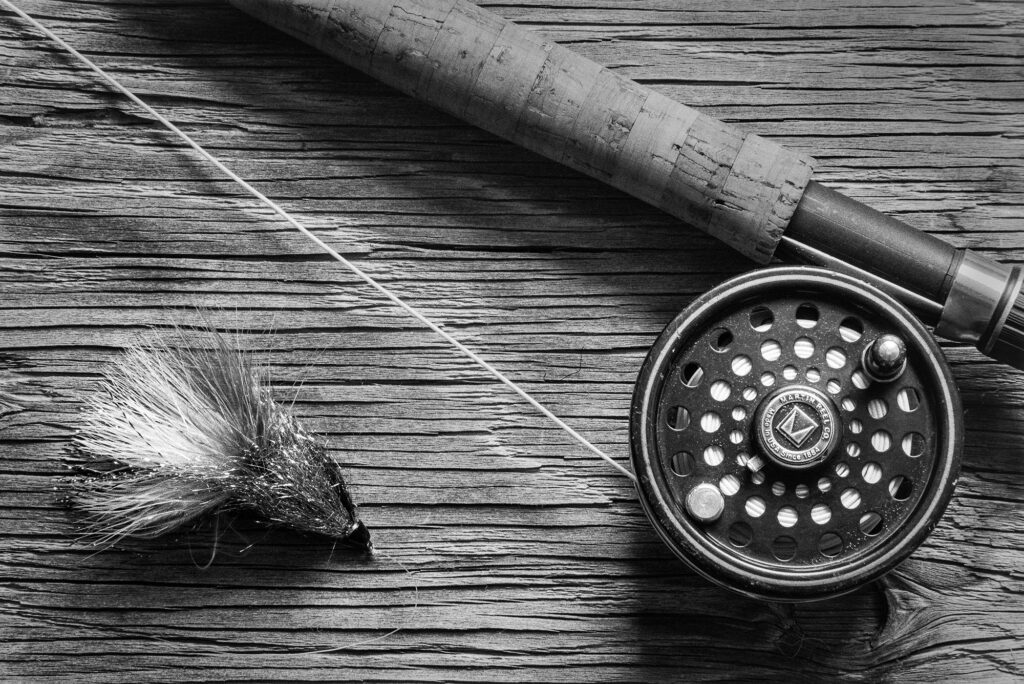
I jumped into my first F100 project with the enthusiasm of a giddy schoolboy. That excitement soon turned to disappointment. Two rolls through the camera, it failed on me. I was not hiking in the Himalayas, or sea kayaking in Thailand. I was in my dining room, testing some new lights with a tabletop studio.
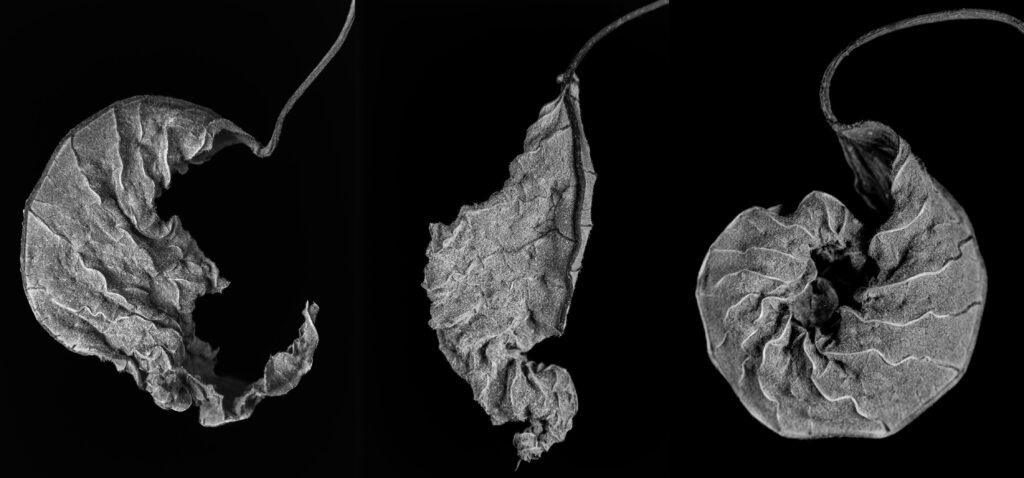
Since I didn’t have a compatible cable release, I used the self-timer to avoid camera shake on a tripod. Once I was done, I turned the drive switch back to single, but the self-timer remained engaged. I could feel that something was wrong in the switch as there was little resistance between settings. Off to the repairman it went, with a discouraging sigh.
Three weeks later it came back, as did my original excitement. I loaded up some bulk-rolled Kentmere 200 and tried to set the ISO manually. That switch didn’t work now. In fact, none of the switches on the left side worked, except, of course, the self-timer.
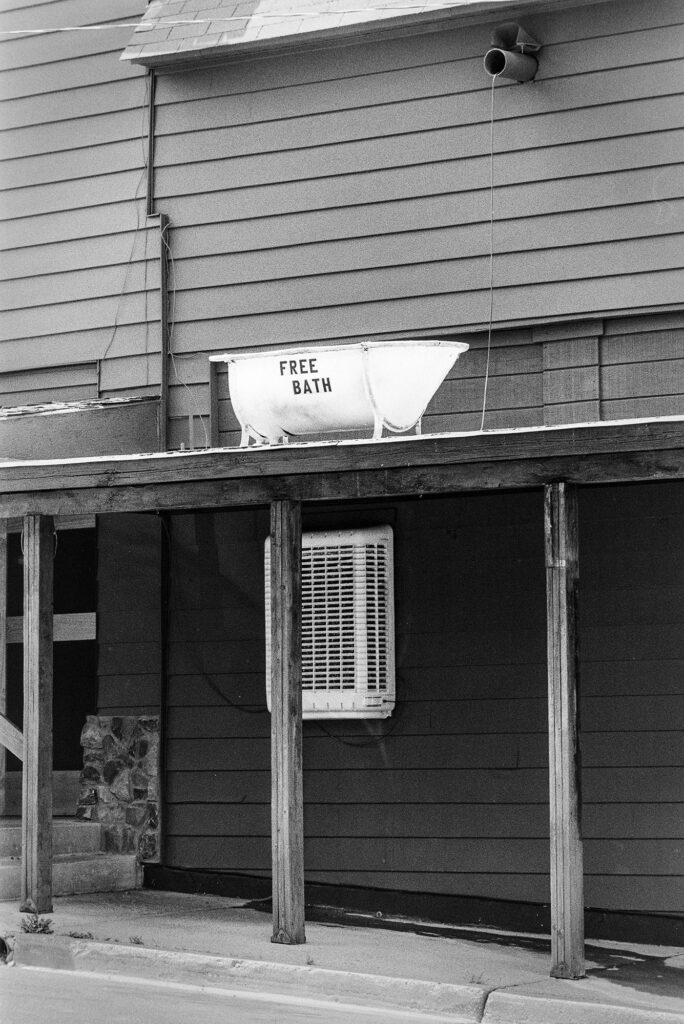
Using the same box, same bubble wrap, and after a few terse words with the repairman’s office manager, I sent it back. Three weeks later it reappeared on my doorstep. I’m happy to report that it is all working again. Such are the adventures in analog photography.
Despite the initial troubles, I have tried to be objective about the experience. It is a fine camera, without question. The technology going into the F100 and shared by the F6 was the apex of Nikon film camera evolution, and helped usher in the digital revolution.

The ancestry of Nikon’s digital SLRs is unmistakeable. It seems like a very short putt from the F100 to the D610 that I use, at least in terms of handling. Ergonomics, location of controls, fit, finish and overall feel are very similar to the Nikon DSLRs. If I were a Nikon DSLR shooter wanting to get a taste of the analog vibe, the F100 would be a very easy transition.
There are plenty of reviews that delve into the more technical aspects of the F100, and I don’t want to take too much space revisiting that. Suffice it to say that is a highly capable camera, endowed with more features and functions than I will ever use. The array of options available on this camera removes any excuse for a poorly exposed or focused image.
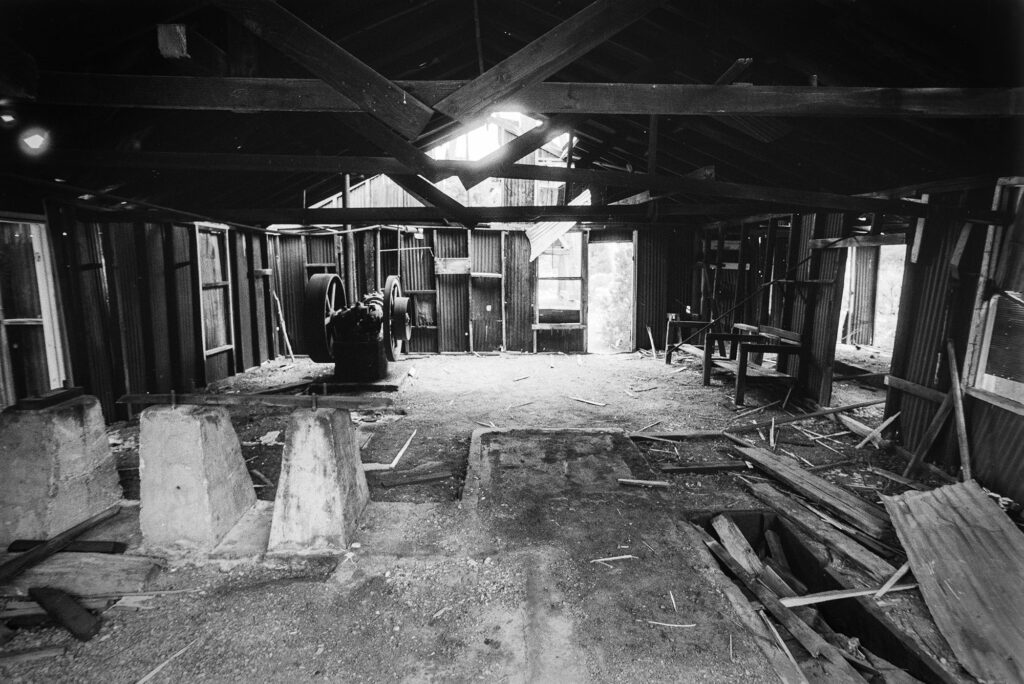
With manual and program modes, and aperture priority and shutter priority modes in between, one can choose any level of automation. Metering, autofocus and drive modes can be changed according to need. With the custom settings available, personal preferences can be programmed.
From roll 1, I have been impressed with how smooth everything works. Film advance is fast. The shutter and mirror movement are well damped. Ergonomics are well thought out. Viewfinder is big and bright. Familiarity with Nikon DSLRs already gave me an advantage, but it is still very easy to just pick it up and start making photos.

From there, the F100 offers a myriad of options for control and creative exploration. Not everybody wants or needs the same things, and no camera can be everything to everybody. That said, this camera covers a lot of needs and wants.
When I attached my AF Nikkor 50mm f1.8 G lens, I was amazed at how fast the autofocus worked. It seemed just as fast as on the D610. I couldn’t believe I was shooting film. The F100 also has the older mechanical autofocus drive system compatible with the Nikkor D series lenses. They are just a little louder and slower, but excellent lenses nonetheless. Of course, it is also compatible with all the AI, AI-S, and AI-converted manual focus lenses. This camera can handle lenses made decades before it as well as decades after. Truly remarkable.
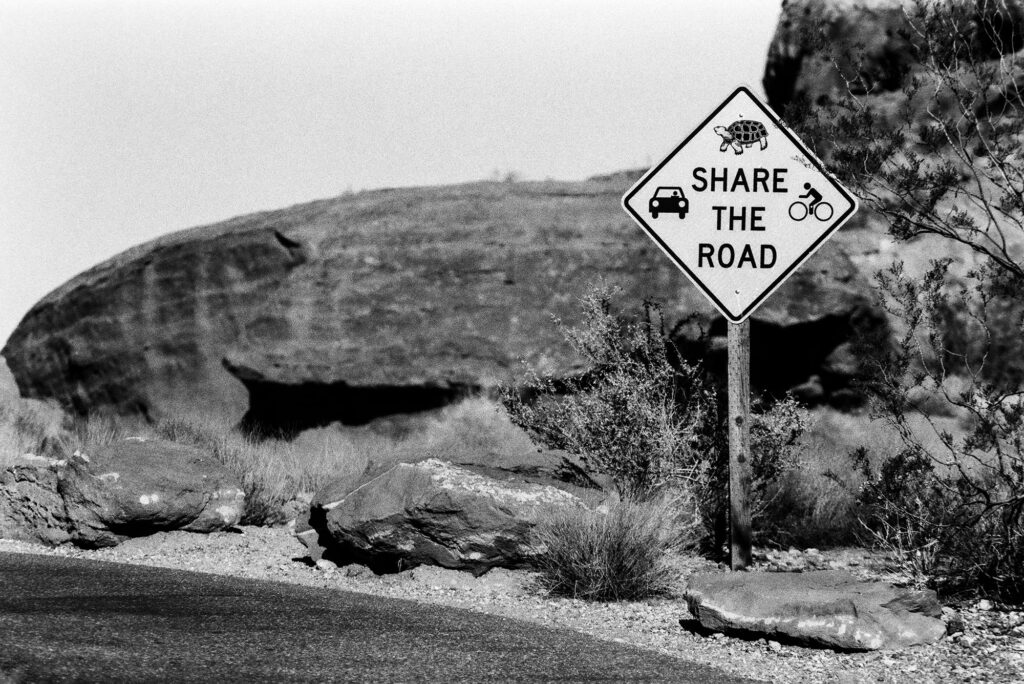
Nikon’s matrix metering is well-known for being accurate, even in difficult lighting situations. With contemporary autofocus lenses, that matrix metering is available. With older manual AI and AI-S lenses, the camera loses the ability to use matrix metering and defaults to center-weighted. This is not a problem for most scenes, but in tricky lighting situations maybe a little exposure bracketing is in order.
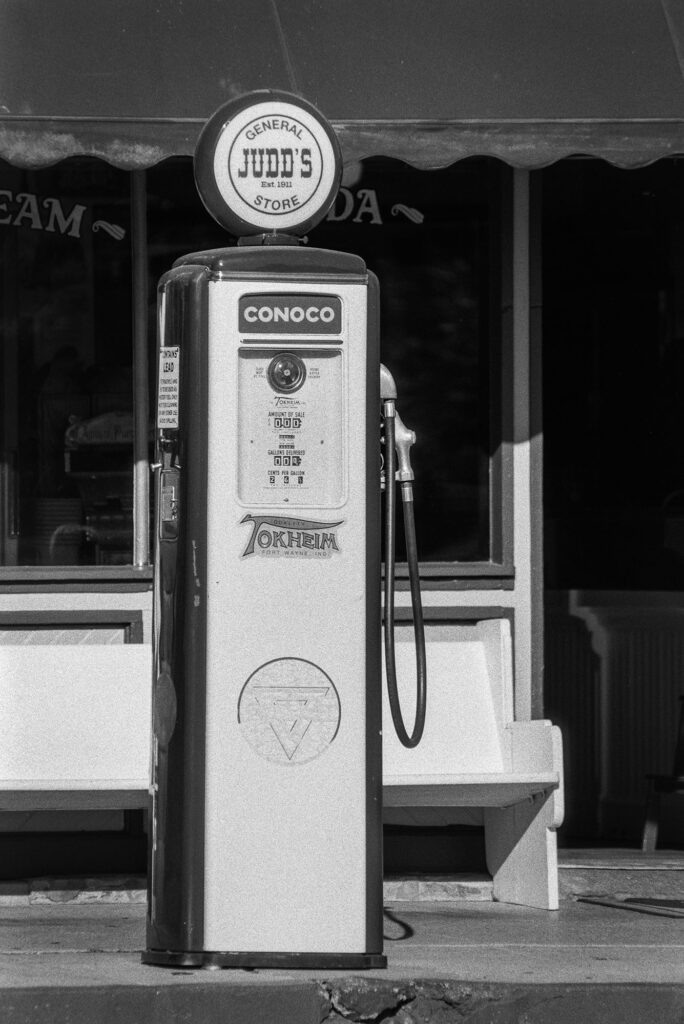
Both of the regular readers of this blog should know by now that I love trying everything out there. I heap praise on anything that I feel deserves it, regardless of price point or pedigree. I also try to keep my expectations realistic. Nevertheless, for years I have trusted my Nikon gear to deliver when it counts. My Nikon cameras and lenses have proven themselves worthy many times.
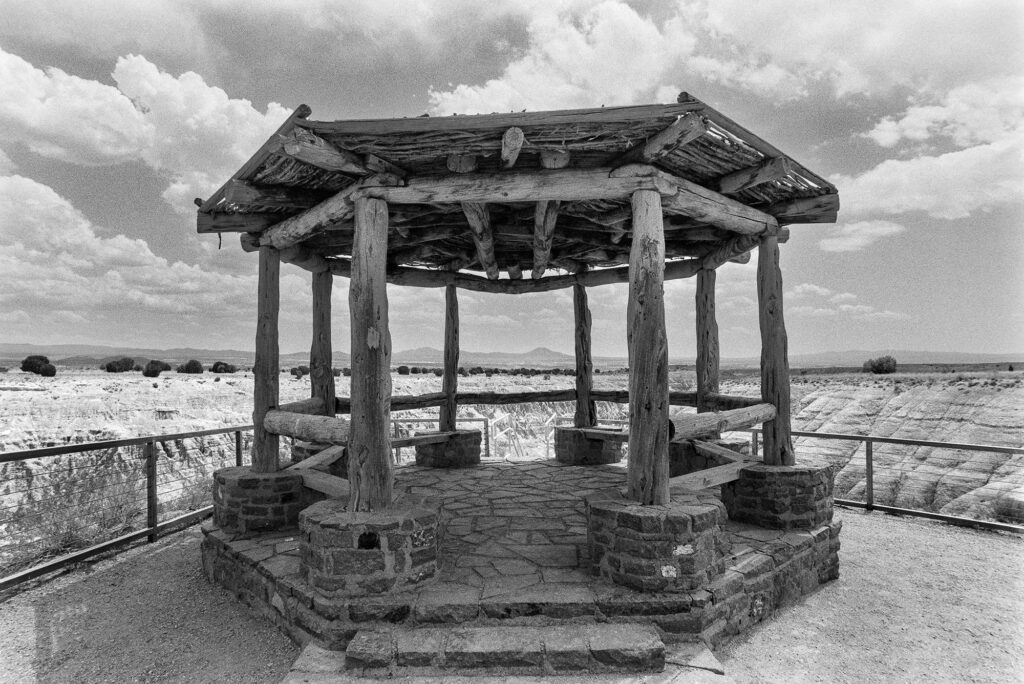
My experience with the (repaired) F100 has been wonderful. The older I get, the more I appreciate good autofocus. There are times when I want to make a photo but still be present in the moment, and automation allows me to do that. Whether walking in the city, exploring a desert landscape, or quietly working a tabletop studio, I find a lot of satisfaction in using the F100. That satisfaction becomes euphoria as the results exceed expectations. This is the rush that drives my passion for photography. The Nikon F100 makes it so easy, it feels like cheating.